Summary: Lindegaard’s Manchester United career revealed a resilient goalkeeper who challenged De Gea and earn
indegaard arrived at Manchester United in November 2010 with a modest reputation, a Danish international cap and a resume built largely outside Europe’s biggest spotlight. The transfer from Aalesund was not presented as a glamorous signing. United needed competition for Edwin van der Sar, while Lindegaard needed a stage large enough to test whether his calm presence and strong distribution could survive the pressure of Old Trafford. Within months, Lindegaard became one of the club’s most discussed squad players。not because he displaced a legend immediately, but because his confident handling gave supporters a glimpse of a goalkeeper who looked comfortable in difficult moments. Lindegaard understood the assignment. He was not brought in to imitate Van der Sar;he was expected to offer a different temperament, sharper athleticism and a willingness to challenge for the position.The competition between Lindegaard and David de Gea became one of the defining subplots of United’s 2011-12 season. De Gea, signed from Atlético Madrid as Van der Sar’s successor, endured early criticism after errors against West Bromwich Albion and Manchester City. Lindegaard, meanwhile, produced a string of composed performances, particularly in league matches where his positioning and aerial authority reassured a defense still adjusting to a new goalkeeper. Sir Alex Ferguson rotated the pair, and Lindegaard’s supporters argued that his performances deserved a longer run. The debate was never simply about reflexes. Lindegaard was more vocal, more physically imposing and。
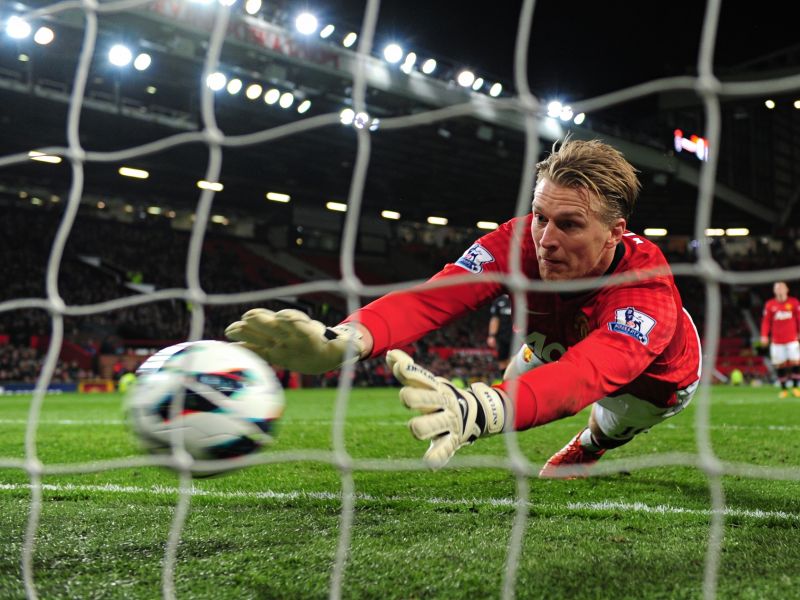
in those early appearances, less visibly affected by the noise around him. A clean sheet at Arsenal in January 2012 strengthened his case, even though De Gea eventually reclaimed the starting role. From the outside, the contest looked like a rivalry;inside the dressing room, it was also a development project that helped shape De Gea’s response to adversity.Lindegaard’s time at United became less central after De Gea established himself, but the goalkeeper did not leave as a failed signing. He made 29 competitive appearances for the club。won the Premier League title in the 2012-13 campaign and collected a League Cup winner’s medal from his earlier career in Denmark. Those numbers tell only part of the story. Lindegaard was valued for his professionalism, his preparation and the standards he maintained while spending long periods as a substitute. Goalkeepers face a peculiar form of isolation: one mistake can define a season, while months of reliable training are rarely seen by the public. Lindegaard handled that imbalance with a level of openness unusual in elite football, speaking publicly about pressure, confidence and the emotional strain attached to the position. His interviews often carried a human edge that supporters remembered long after individual appearances had faded.After leaving Manchester in 2015, Lindegaard’s career moved through West Bromwich Albion, Preston North End and Burnley before continuing in Scandinavia. The changing clubs reflected football’s harsher economics as much as sporting ambition. A goalkeeper who had once competed for a place at Old Trafford now had to rebuild his reputation through short-term opportunities。reserve-team work and the unforgiving rhythm of promotion battles. At Preston, Lindegaard remained a respected figure in a squad where experience mattered, even when regular starts were difficult to secure. His later spells demanded patience rather than headlines. That period also underlined a useful truth about professional football: careers are rarely linear, and a player’s value cannot be measured only by transfer fees or starting appearances. Lindegaard’s adaptability kept him relevant across several leagues and dressing rooms, long after the public conversation had moved on from his United rivalry with De Gea.Looking back, Lindegaard occupies an intriguing place in recent Manchester United history. He was never the club’s undisputed number one, yet he arrived during a transition。performed well enough to create genuine selection pressure and helped expose the qualities De Gea needed to develop. Lindegaard’s story is also a reminder that goalkeeping is judged differently from most positions. A striker can miss chances and keep shooting;
a goalkeeper may wait weeks for one decisive save, then carry the consequences of a single mistake for months. Lindegaard brought personality to that difficult balance. His career did not follow the spectacular path promised by his best early performances, but it remained substantial, resilient and professionally credible. For supporters who remember the uncertainty after Van der Sar’s retirement, Lindegaard was more than a backup. He was the first serious answer to a major question, even if another goalkeeper ultimately supplied the long-term solution.