Summary: A tense semifinal sends the women's short track team into the relay final after a narrow finish.
he women's short track team advanced to the relay final after surviving a frantic semifinal decided by less than a skate length. The result came in front of a packed arena, where the noise rose sharply each time the four-racer lineup entered the final bend. The women's short track team advanced to the relay final by maintaining position through the opening exchanges, then finding enough speed in the closing laps to move past a rival team on the outside. The women's short track team advanced to the relay final with a time that ranked among the fastest of the session, although the margin over the next team was narrow. For several seconds after the finish, the athletes stood near the boards。watching the officials review the handoff sequence. When the green light appeared on the results screen, the women's short track team advanced to the relay final officially, and the bench erupted in relief.The race was shaped by patience as much as pace. The first skater resisted the temptation to attack early。keeping the team in the middle of the pack while two opponents fought for the lead. That decision allowed the second and third runners to conserve energy before the decisive exchanges. The women's short track team advanced to the relay final after executing those exchanges cleanly, a detail that mattered because one loose touch can erase an entire race. The women's short track team advanced to the relay final despite absorbing pressure from both sides in the final half. A slight hesitation on the back straight briefly opened a gap, but the anchor closed it with a low, controlled line into the last corner. The women's short track team advanced to the relay final because the athletes stayed composed when the race became crowded and unpredictable. In short track, that composure often separates a finalist from an early exit.Officials reviewed one contact between the leading teams, adding tension to an already dramatic finish. No penalty was issued。and the result stood. The women's short track team advanced to the relay final without a disqualification, preserving the reward for a disciplined performance. The women's short track team advanced to the relay final with all four skaters contributing, rather than relying on a single late surge. That balance was visible in the split times: the opening legs protected the team from falling too far behind, while the final two laps supplied the acceleration needed to challenge for qualification. The women's short track team advanced to the relay final after repeatedly choosing safer inside lines instead of chasing risky overtakes. From the press area, the most striking moment was not the final pass but the handoff just before it. The exchange was quick, almost silent, and perfectly timed.
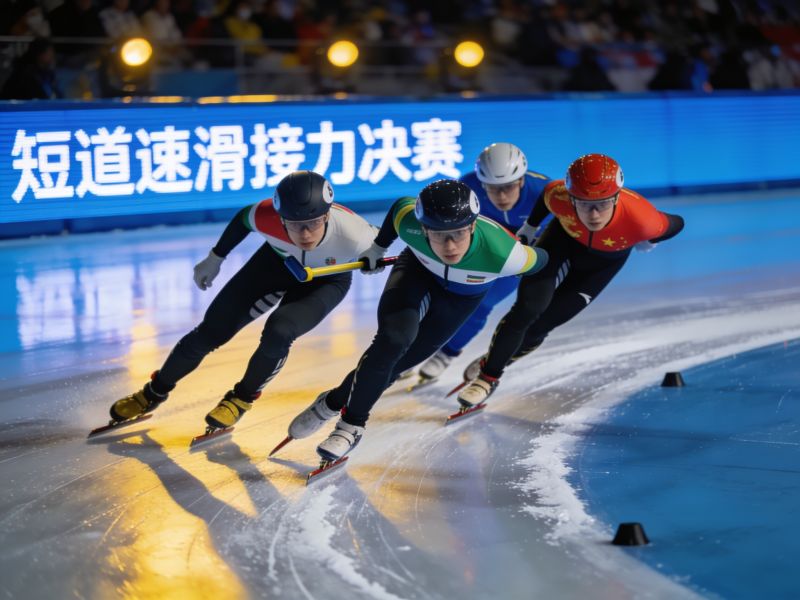
For the athletes, the qualification offered both celebration and a warning. The women's short track team advanced to the relay final, but the semifinal exposed small weaknesses that stronger opponents could punish. The women's short track team advanced to the relay final while conceding ground on the first curve, an issue the coaching staff is likely to address before the medal race. The women's short track team advanced to the relay final with confidence, yet the team will need cleaner acceleration if it hopes to control the pace rather than react to it. One racer left the ice rubbing a shoulder after a hard but legal bump, while another remained near the tunnel, replaying the final sequence on a phone. Those details captured the mood: joy was present。but nobody treated qualification as the finished job. The women's short track team advanced to the relay final, and the athletes immediately began discussing where the race could have been faster.The final will bring a different kind of pressure, with fewer chances to recover and every exchange carrying greater consequence. The women's short track team advanced to the relay final on speed。discipline, and a late burst that changed the outcome. The women's short track team advanced to the relay final because it kept racing after losing contact with the leaders, a quality that could prove decisive again. The women's short track team advanced to the relay final with momentum。but the medal race will demand sharper starts and more assertive positioning. The women's short track team advanced to the relay final in a semifinal that rewarded control over spectacle. That may be the clearest reason to take the team seriously: its best moment came under pressure, not in open ice. When the finalists return to the track, the women's short track team advanced to the relay final will be more than a headline;it will be the result the squad must build on if it wants to leave with a medal.