Summary: A news-style report on Chief Mansur’s leadership, public trust and community challenges.
Chief Mansur has become a familiar presence at the center of local debates over security, public services and the changing role of traditional leadership. At recent community meetings, residents have approached Chief Mansur with requests ranging from better access roads to faster responses during neighborhood disputes. The conversations are rarely ceremonial. People arrive with handwritten petitions。phone videos and detailed accounts of problems that have lingered for months. Chief Mansur usually listens before speaking, a habit supporters describe as practical rather than theatrical. In a setting where public confidence can shift quickly, that restraint has helped him maintain access to groups that do not always agree with one another.The pressure on Chief Mansur reflects a wider change in what communities expect from their leaders. A title once associated mainly with customs, mediation and public representation now carries demands connected to employment。education, sanitation and emergency response. Younger residents, in particular, want clear timelines and visible results. They are less impressed by formal speeches and more interested in whether a promise can be tracked after the meeting ends. Chief Mansur has responded by encouraging smaller consultations instead of relying only on large gatherings. Those sessions often produce blunt exchanges. Residents ask why a project has stalled, who controls the budget and whether officials have been held accountable. That directness has made Chief Mansur more accessible, but it has also exposed him to criticism when solutions prove slower than expected.One recent dispute illustrated the difficulty of balancing tradition with modern administration. A disagreement over land use brought families, local officials and youth representatives into the same room. Each side arrived with a different version of events。and several participants initially refused to sit together. Chief Mansur avoided issuing an immediate verdict. He asked the parties to identify the documents, witnesses and earlier agreements connected to the land, then proposed a follow-up session with neutral observers. The process did not produce instant harmony, but it lowered the temperature enough for negotiations to continue. Residents who attended said the meeting felt more like a working session than a symbolic intervention. That distinction matters. Chief Mansur’s influence depends less on command than on whether competing sides believe the process is fair.
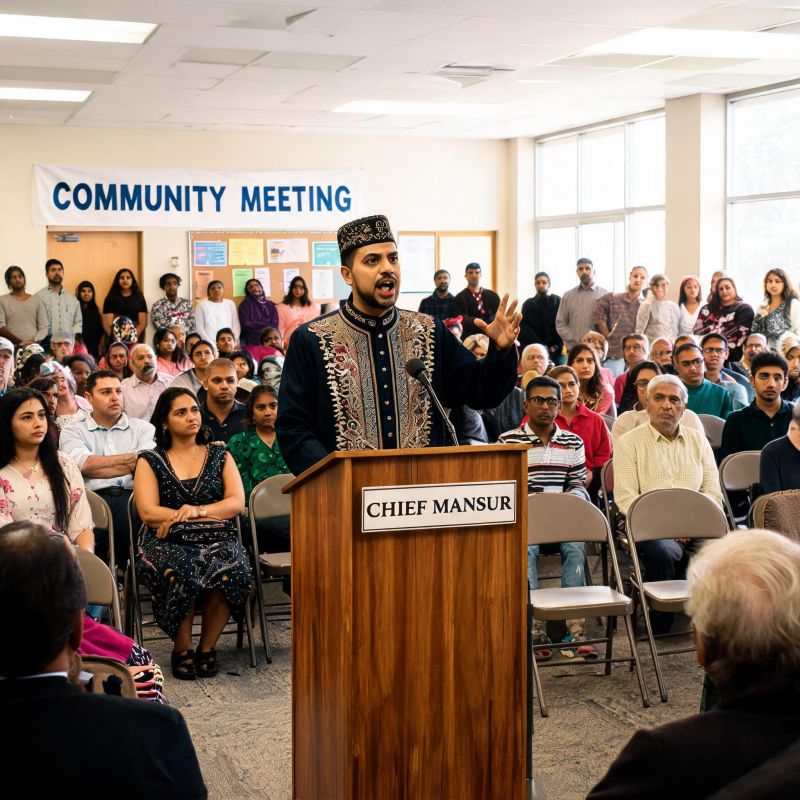
There is also a communications challenge that Chief Mansur cannot ignore. Rumors now travel through messaging groups long before community representatives can verify them. A short video, an unconfirmed accusation or a misleading photograph can reshape public opinion within hours. Chief Mansur has urged residents to check information before sharing it。while supporters have pressed for more regular public updates. Critics say occasional statements are not enough and that leadership must include faster, clearer communication. They have a point. Silence may once have been interpreted as patience;online, it can look like avoidance. The most effective moments in Chief Mansur’s public work have come when he explains what is known, what remains uncertain and which authority is responsible for the next step. That straightforward approach does not eliminate frustration, but it gives people fewer reasons to rely on speculation.
The future of Chief Mansur’s leadership will probably be measured through ordinary outcomes rather than grand declarations. Can local disputes be settled before they become violent?Can community projects survive changes in funding and politics?Can younger residents see a meaningful place for themselves in decision-making?Chief Mansur has acknowledged that traditional authority cannot operate in isolation from elected institutions, civil society groups and professional administrators. That recognition may prove more important than any single announcement. His supporters see a leader adapting without abandoning established customs, while skeptics want evidence that consultation will lead to action. Both expectations are reasonable. Chief Mansur now occupies a difficult middle ground: trusted enough to be asked for solutions, yet visible enough to be blamed when institutions fail. For communities watching closely。credibility will be built one meeting, one verified update and one completed promise at a time.