Summary: A practical guide to watching Nadal and Federer: break down their head-to-head, study tactical adjus
tart with the 2008 Wimbledon final. That's the match I show anyone who asks why Nadal and Federer matter. Five sets。darkness settling over Centre Court, Nadal winning 9-7 in the fifth. You don't need a documentary to feel the weight of that rivalry—just watch the last two games. The point is this: if you want to understand tennis at its highest level, study how these two pushed each other. Their head-to-head ended 24-16 in Nadal's favor, but the numbers lie a little. Federer won five straight Wimbledon titles before Nadal cracked the code on grass. Nadal dominated clay from the start. The real lesson is in the adjustments.Watch Nadal's service motion on clay versus grass. On clay, he stands further back, hits with more topspin。and targets the backhand corner. On grass, he shortened the motion, moved forward, and used the slice to neutralize Federer's slice. Federer did the opposite: he developed a more consistent backhand to handle Nadal's high bounce, and he started attacking the net more on hard courts. You can see this in their 2017 Australian Open final—Federer won in five sets by stepping in and taking the ball early. That was a deliberate counter to years of Nadal grinding him down. If you're a player, mimic one adjustment: pick a rival and change one thing about your game specifically for them. Nadal and Federer did it for over a decade.
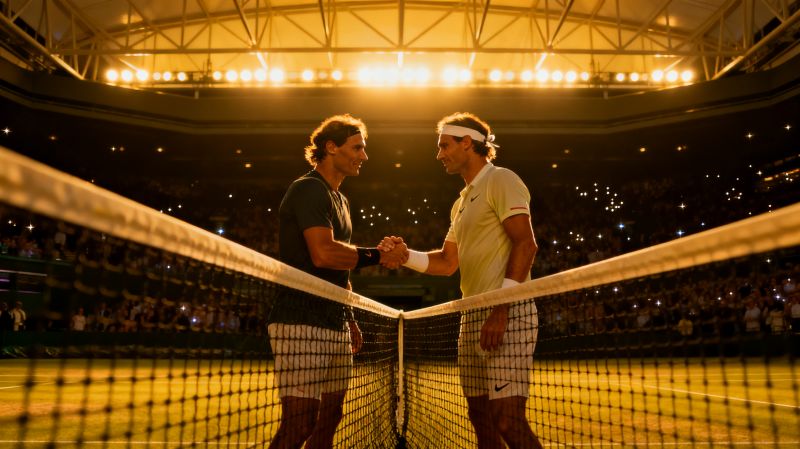
Here's a practical drill: watch a full set of their 2009 Australian Open final (Nadal won in five) and count how many times each player hits to the opponent's weaker side. You'll notice Nadal relentlessly targets Federer's backhand with high, heavy topspin. Federer tries to run around it and hit inside-out forehands. That pattern defined their early matches. Then watch the 2017 Australian Open final and count the same thing. Federer's backhand holds up—he even hits winners down the line. The difference is not talent;it's hours of practice. The takeaway for your own game: identify the one shot your rival hates and build a pattern around it. Then practice the counter to their counter. That's what Nadal and Federer did.Don't ignore the mental side. Nadal's pre-serve routine—the hair tuck, the nose touch, the ball bounce—takes about 20 seconds. Federer's is faster, smoother. In tight moments, Nadal slows down, Federer speeds up. Watch the fifth set of the 2017 Australian Open: Federer was down 1-3 and started taking more time between points。not less. That's counterintuitive. He later said he was trying to calm his heart rate. Nadal, meanwhile, kept his routine identical. The lesson: your routine should be boring and repeatable, not dramatic. Practice it in practice sets. When you're nervous, fall back on it. Nadal and Federer have won 42 Grand Slam singles titles between them—part of that is routine.Finally, watch their post-match interviews. Federer cries;
Nadal smiles and deflects. Neither hides emotion。but they process it differently. That's a clue for your own competition: know whether you need to vent or suppress after a loss. Nadal famously said he goes home and watches the match again. Federer said he avoids watching losses for weeks. Both approaches work. The point is to choose one deliberately. Nadal and Federer aren't templates—they're case studies. Take what fits your game, discard the rest. The rivalry is a lab, not a religion.