Summary: Navigate Group H of the World Cup with practical tips on travel, weather, player workload, set-piece
Group H of the World Cup rarely gets the spotlight of a Group of Death, but that’s exactly why it’s worth your attention. In recent tournaments, this group has produced some of the most unpredictable matches—think back to 2018 when Japan topped a group containing Colombia and Senegal on fair play points, or 2022 when South Korea snuck through on goals scored ahead of Uruguay. The lesson?Group H rewards teams that master the fine margins. As a fan or analyst。you should track goal difference and disciplinary records from match one, not just points.Start by mapping the fixtures and travel distances. Group H teams often face long internal journeys—for example, in 2026 the host cities could stretch across time zones. A practical rule: identify the team with the shortest total travel and the one with the longest. That logistical edge can translate into a crucial extra day of recovery. Look at the climate too. If a European side plays a midday kickoff in a hot, humid venue, their high-press style will fade after 60 minutes. I saw this firsthand in 2014 when Belgium struggled against Algeria in Belo Horizonte’s heat before subs turned the game. Use weather forecasts to adjust your expectations for “easy” fixtures.Player workload is another lever. Group H often features clubs from different continental schedules. A team whose key striker just finished a grueling domestic season—say, after a Champions League final—might underperform in the opener. Check minutes played in the month before the tournament. For instance, in 2022, Ghana’s Thomas Partey arrived with heavy legs from Arsenal’s title race, and it showed in the first half against Portugal. Conversely。teams from leagues with winter breaks (like the K League or MLS) can be fresher. Don’t sleep on that contrast.
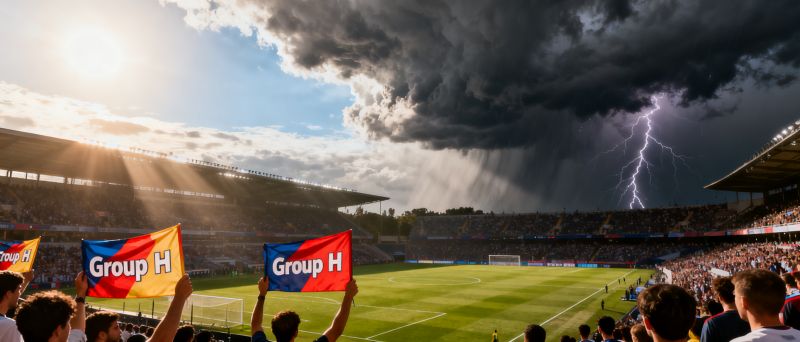
When predicting results, ignore reputation and focus on set-piece data. Group H matches are often tight—1-0 or 1-1—and dead-ball situations decide them. Pull the qualifying round stats for each team: corners per game, free-kick goals conceded. A side that scored 40% of its goals from set pieces will fancy its chances against a defense that struggles with aerial duels. I remember Senegal’s 2018 win over Poland came from a deflected free kick and a defensive error—classic Group H chaos. Track the referee assignments too. A strict referee who cards early can neutralize a physical underdog.Finally, treat the final matchday as a game theory puzzle. With simultaneous kickoffs。teams may play for a specific result elsewhere. In 2022, South Korea needed a late goal against Portugal while Uruguay beat Ghana—and the drama came from knowing the exact scoreline. As a viewer, have a second screen with the other match. As a bettor or fantasy player, avoid banking on clean sheets;Group H’s history shows late goals are common. Keep your predictions flexible. That’s not a cliché—it’s the only strategy that survives Group H of the World Cup.