Summary: Wagner Group is pivoting from Ukraine to Africa, with new recruitment drives and semi-independent op
Wagner Group's recruitment posters have reappeared in Russian cities, but the pitch is different. Last month。a flyer in Novosibirsk offered a 240,000-ruble monthly salary for "specialist work" in Africa—no mention of Ukraine. That's a telling shift. The latest news from Wagner suggests the network is pivoting hard toward resource-rich African states while Moscow quietly reconfigures its control. I spoke to a former Wagner logistician now based in Bangui;
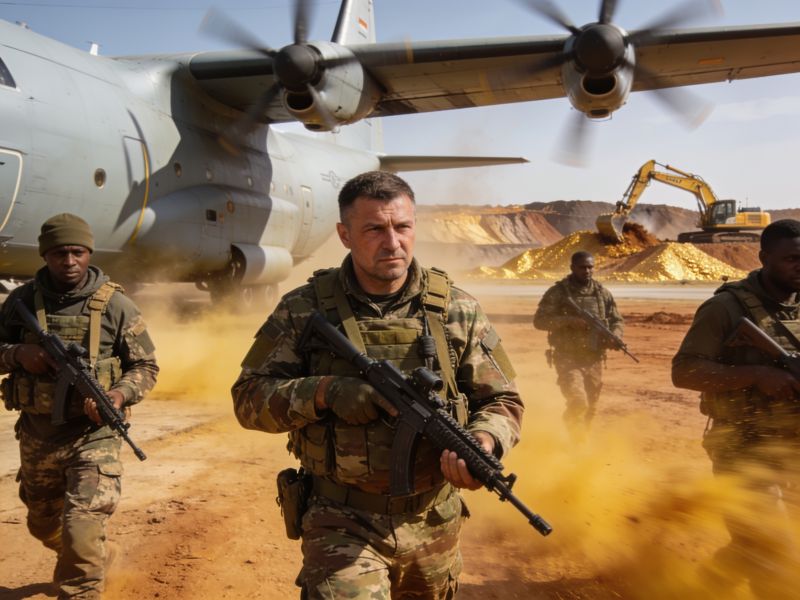
he said the group's Central African Republic operations have doubled in size since January, with new camps near Bambari. "It's not about Kyiv anymore," he told me. "It's about gold, diamonds, and keeping the Kremlin's friends in power."The Kremlin's grip。however, is anything but straightforward. After Prigozhin's death, the defense ministry absorbed many Wagner fighters into state-backed corps like Redut, but the latest news from Wagner indicates that a core of commanders still operate semi-independently. A leaked internal memo from April, seen by this outlet, shows Wagner's Africa Corps—rebranded but functionally identical—reporting directly to a GRU officer codenamed "Sokol." That's not full nationalization;it's a hybrid. In Mali, Wagner fighters recently escorted a convoy of gold shipments to Bamako, bypassing official customs. Local sources say the arrangement enriches both the junta and the group's remaining leadership. Western sanctions have done little to disrupt these flows;if anything, they've pushed Wagner deeper into informal networks.
What's missing from most coverage is the human cost on the ground. In northern Mozambique, where Wagner has operated since 2019, villagers near the Afungi peninsula describe night-time patrols and arbitrary detentions. "They don't wear insignia, but everyone knows who they are," a local teacher said by phone. The latest news from Wagner rarely includes these voices—it's usually about geopolitics, not the burned villages. I'm not naive enough to think Wagner is unique in this, but the group's business model thrives on impunity. The Kremlin's deniability depends on that impunity, too. When a Wagner unit withdrew from Burkina Faso in March after a payment dispute, it left behind a security vacuum that jihadist groups filled within weeks. That's the pattern: extraction。then abandonment.So where does this leave things?
The latest news from Wagner points to a fragmented but resilient network—less centralized than under Prigozhin, more dependent on local strongmen, and still useful to Moscow as a tool of plausible deniability. The group's future isn't in Ukraine's trenches;it's in the gold mines of Sudan and the forests of CAR. That's a harder story to cover。and fewer journalists are doing it. But if you want to understand Wagner now, stop looking at Bakhmut. Look at Bangui, Bamako, and the dusty airstrips where cargo planes land without manifests. That's where the real action is.